
My wall is stained or bubbling. Is it wet inside?
Probably. Brown stains, bubbling paint, soft spots and peeling wallpaper mean moisture is in the drywall or the cavity behind it. People describe it as a damp wall, a wall that smells musty or a stain that keeps coming back.
A wall that looks dry can still hold water in the cavity or the insulation. Moisture meters and thermal imaging show what the eye cannot.
Wall and drywall water damage repair in Norristown, PA starts by finding the source. Our phone line answers 24/7. A leaking pipe in the wall, a window leak and a roof leak all end up as a wet wall, and each needs a different fix.
Stop the water if you can, move furniture away from the wall and do not puncture a bulge without a plan, since it can release a lot of water at once. If a wall is near wiring, keep away and call the utility or 911 if there is any hazard.
What water does to drywall
Drywall is gypsum between paper faces. Paper feeds mold when wet, and the gypsum softens and loses strength. Clean water that is dried within a day or two may leave drywall sound. Wet for longer, or touched by contaminated water, it is cut out.
Insulation inside the wall holds water as well. Fiberglass can be dried in some cases, while other types are removed. Read more about the process in structural drying.
Dry or remove?
| Condition | Usual decision | Why |
|---|---|---|
| Clean water, short exposure | Often dried in place | Material is intact |
| Soft, sagging or crumbling board | Remove | Strength is lost |
| Visible mold | Remove affected area | Mold feeds on paper |
| Contaminated water | Remove | Category 2 or 3 |
| Wet insulation | Usually remove | Holds water |
How wall drying works
- Moisture mappingMeters and a thermal camera find wet areas and the edge of the damage.
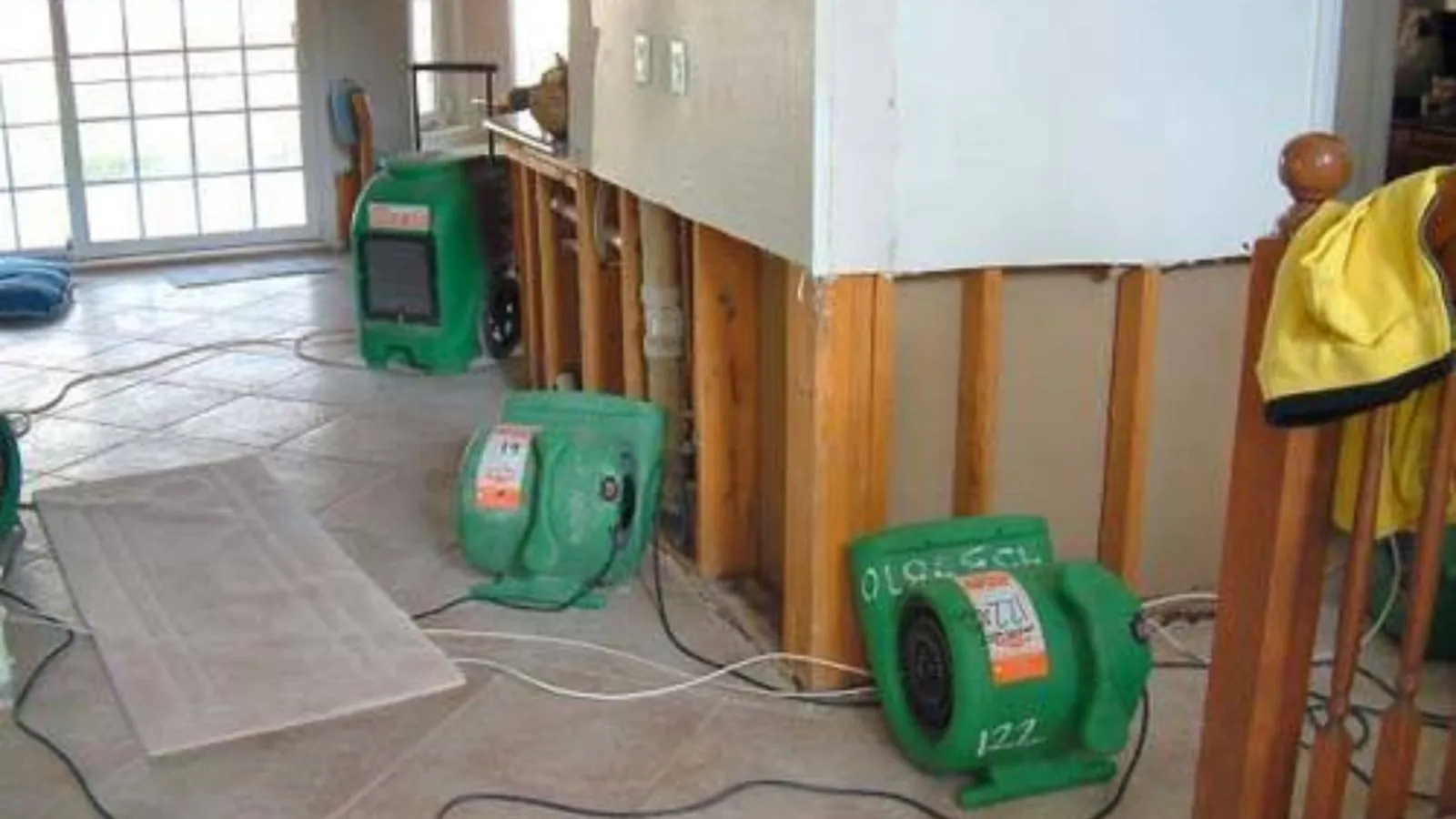
- Flood cutsWhen needed, drywall is cut a short distance above the wet line so the cavity can be reached.
- Cavity dryingAir is pushed or drawn through the cavity, sometimes through small holes at the baseboard.
- DehumidifyThe room air is kept dry.
- Re-measureReadings confirm the wall is dry before closing it.
Signs of water inside a wall
- A stain that spreads after a rain or a shower
- Bubbling or peeling paint
- A musty smell near a baseboard
- Soft or warm spots on the wall
- Warped baseboards or loose trim
Mistakes with wet walls
Wet walls tempt quick fixes. Painting over a stain, caulking a gap or hanging a fan in the room seals or hides moisture instead of removing it, and the wall stays damp inside. Mold then grows on the back of the board where no one sees it.
- Painting or priming over a stain before the wall is dry
- Poking holes without knowing where wiring runs
- Leaving wet insulation in the cavity
- Pushing furniture back against a wall that is still damp
- Assuming a dry surface means a dry cavity
What shapes the cost of this job
Wall damage can be a small patch or a full run of wall. These are the factors.
Insurance: sudden pipe failure is often covered, slow seepage often is not. Photograph the wall before any cutting.
Where we work
We handle wall damage in Norristown, Conshohocken, Bridgeport, Plymouth Meeting and Worcester. Water from pipes is covered under burst pipe water damage, and moldy walls under mold remediation.
Standards behind this work
Professional water damage work follows the published ANSI/IICRC S500 standard, which sets how water is classified, what can be dried and what must be removed. That is a statement about the industry standard crews work to. It is not a claim about any individual certificate, and it does not promise a result.
Safety steps while you wait
- Stay out of rooms where water is near outlets, the panel or appliances
- Call the utility or 911 for any electrical or gas hazard
- Keep children and pets away from standing water
- Do not use household vacuums or fans on contaminated water
- Photograph the damage only if it is safe to do so
Frequently asked questions
Can wet drywall be saved?
If it is clean water and the board is still firm, drying in place often works. Soft or moldy board is removed.
Do you open walls?
When readings show water in the cavity, small cuts give access. We scope this before cutting.
Will paint fix the stain?
Paint covers a stain but not moisture or mold behind it.
How do I know the wall is dry?
Moisture readings match an unaffected reference wall. Touch is not enough.
Do you patch and paint?
Finishing is a separate trade, and we coordinate the scope.