
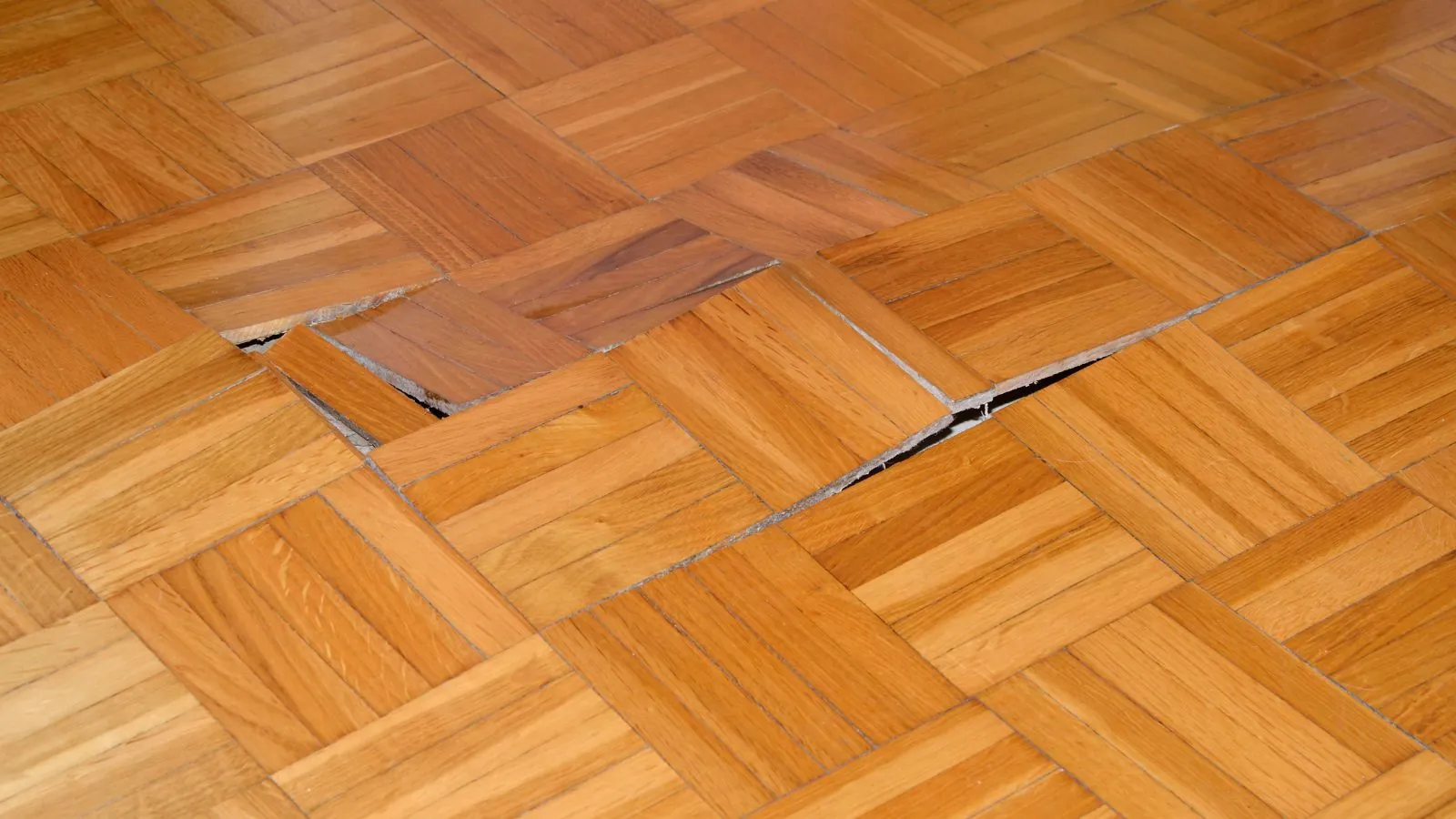
My hardwood floor is cupping or buckling. Can it be saved?
Sometimes. Cupping means board edges rise higher than the centers. Crowning is the reverse. Buckling means boards lift off the subfloor. All three come from moisture, and the earlier drying starts the better the odds. People describe it as a wavy floor, raised edges, gaps between boards or a floor that feels spongy.
A floor that is only cupped after a short wet period often flattens once it is dried slowly. Buckled boards, or a floor soaked for days, are more likely to need replacement.
Hardwood floor water damage repair in Norristown, PA starts with finding where the water is. Our phone line answers 24/7. Water under a floor can come from a dishwasher, a plumbing leak, a slab, a basement or a storm, and the source decides the plan.
Stop the source, wipe standing water, lift rugs and furniture off the floor and open nearby cabinet doors and closets so air reaches the boards. Do not use heat guns or a household iron on wet wood.
What happens to wood when it gets wet
Wood absorbs water through its underside and edges first, so the bottom swells before the top. That uneven swelling is what produces cupping. Finishes such as polyurethane slow water on top but do little to stop it entering at seams and edges.
Moisture meters show whether the boards and the subfloor beneath have returned to a normal range. Drying a surface that feels dry while the subfloor is still wet can lock the problem in. See structural drying for the equipment involved.
How hardwood is dried
- Find the extentMoisture readings across the floor and subfloor show where the water went.
- Remove standing waterExtraction pulls water from the surface and gaps.
- Controlled dryingAir movers and dehumidifiers run steadily. Drying wood too fast can crack it.
- Specialty dryingMats or panels that pull moisture from below are sometimes used on finished floors.
- Wait and re-measureBoards often settle over days or weeks, so sanding and refinishing is decided after readings are stable.
Save or replace?
| Condition | Usual outcome | Reason |
|---|---|---|
| Light cupping, short exposure | Often dried and refinished | Boards can relax |
| Heavy cupping or crowning | Case by case | Depends on readings and time |
| Buckled boards | Often replaced | Fasteners and subfloor bond are compromised |
| Black stains or mold | Replace affected boards | Water has been present for days |
| Engineered wood | Often replaced | Thin wear layer and glue lines delaminate |
Signs of hidden water under the floor
- A damp or musty smell in a closed room
- Gaps opening between boards
- A soft or bouncy feel underfoot
- Stains at board seams
- A water stain on the ceiling below
What shapes the cost of this job
Hardwood jobs range from a drying visit to replacing part of a floor. These factors decide.
Insurance: a sudden leak is often covered, long-term seepage often is not. Photograph the floor before it is touched and ask your insurer what they need.
Where we work
We handle hardwood damage in Norristown, Conshohocken, Bridgeport, Plymouth Meeting and Worcester. If carpet rather than wood is wet, see carpet water damage restoration. A kitchen leak is covered on the kitchen page.
Standards behind this work
Professional water damage work follows the published ANSI/IICRC S500 standard, which sets how water is classified, what can be dried and what must be removed. That is a statement about the industry standard crews work to. It is not a claim about any individual certificate, and it does not promise a result.
Safety steps while you wait
- Stay out of rooms where water is near outlets, the panel or appliances
- Call the utility or 911 for any electrical or gas hazard
- Keep children and pets away from standing water
- Do not use household vacuums or fans on contaminated water
- Photograph the damage only if it is safe to do so
Frequently asked questions
How fast do I need to dry a wet hardwood floor?
As soon as possible. Wood begins swelling within hours, and mold can start within a day or two. Call right after the source is stopped.
Can I just sand and refinish?
Only after the boards and subfloor are dry and stable. Sanding too early can leave a floor that cups again.
Should I pull up the boards?
Sometimes a few are removed to let air reach the subfloor. That is a decision made with moisture readings.
Does engineered flooring behave the same?
It tends to delaminate, so it is replaced more often than solid wood.
Do you refinish floors?
Refinishing is a separate trade. We dry the floor and scope what needs replacing.