
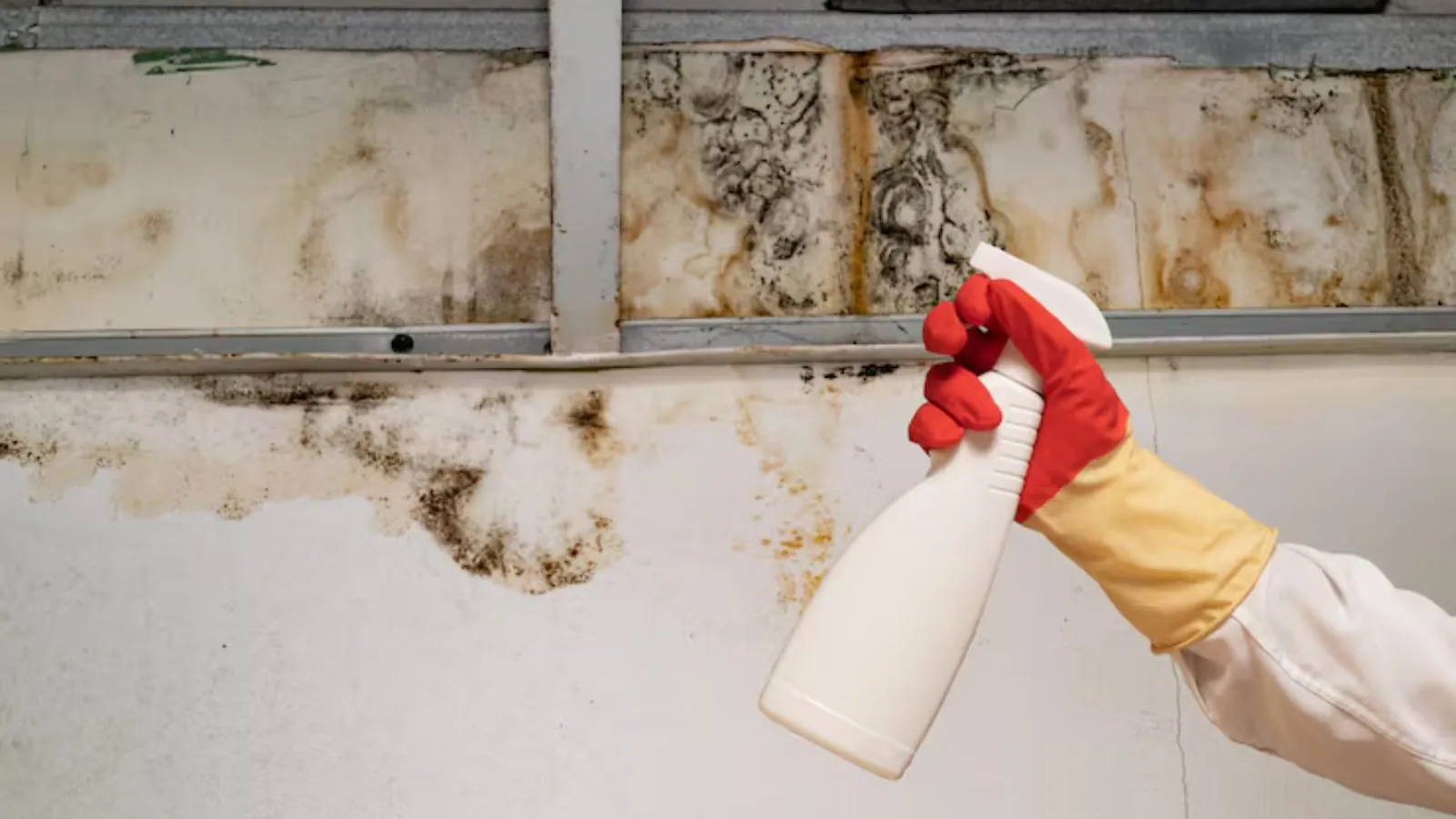
I see mold after a leak. What now?
Do not disturb it. Brushing, fanning or spraying can send spores into the air. Keep the area closed, stop any water source and call. People describe it as dark spots on a wall, a musty smell, fuzzy patches in a basement or stains on a ceiling.
Mold needs moisture, so the source has to be found and fixed. Cleanup without drying only brings the mold back.
Mold remediation in Norristown, PA is usually urgent rather than an emergency, but every day of moisture adds to the growth. Our phone line answers 24/7. We ask where the mold is, how large the area is and whether the water source has been stopped.
Keep people with asthma, allergies or weakened immune systems away from the area. Do not use bleach as a cure. Do not run the HVAC system through a moldy space.
Why mold appears after water damage
According to the EPA, mold can start growing on wet materials within 24 to 48 hours. Drywall paper, wood, carpet, ceiling tile and insulation are the common hosts. Most mold problems follow a leak, a flood or high humidity that was not dried.
Fast drying is the best prevention. See structural drying and basement cleanup.
What remediation involves
- Find and fix the moistureThe source is stopped and wet materials are measured.
- ContainmentPlastic barriers and negative air keep spores from spreading.
- Remove affected materialsPorous materials with growth, such as drywall and carpet, are removed and bagged.
- CleanSurfaces that can be cleaned are HEPA vacuumed and wiped.
- Dry and verifyMoisture is brought to normal, and the area is checked before rebuild.
Mold testing
Testing is optional and does not replace a visual check. Air samples show spore counts at one moment, and results vary widely. The EPA does not recommend routine sampling when mold is visible, since the response is the same: remove it and fix the moisture. Testing can help when mold is suspected but hidden, or when an adjuster or lawyer asks for it.
If you want a clearance test after work, an independent tester is often preferred because the testing company is separate from the remediation company.
What to expect
| Mold area | Typical approach | Notes |
|---|---|---|
| Small surface patch | Cleaning and drying | Often handled with careful cleaning |
| Larger patch, wall or ceiling | Containment and removal | Materials are cut out |
| Widespread growth | Full containment | May affect the HVAC system |
| Hidden growth | Investigate first | Moisture readings and inspection |
Mistakes that spread mold
Disturbing mold is the quickest way to enlarge the problem. Dry brushing, sanding, fanning or spraying releases spores, which settle on other surfaces and start new growth where it is also damp.
- Scrubbing dry mold without protection or containment
- Running a fan or the HVAC system through the area
- Painting over mold with a stain-blocking primer
- Storing damp boxes and clothes against the wall
- Ignoring a plumbing or roof leak while cleaning the surface
What shapes the cost of this job
Mold costs depend on how far the growth has spread and what it is growing on.
Insurance: mold coverage is often limited or excluded. Ask your insurer, and note that a covered water loss may be treated differently from long-term moisture.
Where we work
We handle mold in Norristown, Bridgeport, Plymouth Meeting, Worcester and Conshohocken. If the mold followed a leak in a wall, see wall and drywall repair. For crawl spaces, see crawl space water damage.
Standards behind this work
Professional water damage work follows the published ANSI/IICRC S520 standard, which sets how water is classified, what can be dried and what must be removed. That is a statement about the industry standard crews work to. It is not a claim about any individual certificate, and it does not promise a result.
Safety steps while you wait
- Stay out of rooms where water is near outlets, the panel or appliances
- Call the utility or 911 for any electrical or gas hazard
- Keep children and pets away from standing water
- Do not use household vacuums or fans on contaminated water
- Photograph the damage only if it is safe to do so
Frequently asked questions
Can I clean mold with bleach?
Bleach is not recommended as a cure. It does not fix the moisture, and it does not work well on porous materials.
Is mold remediation an emergency?
Usually urgent, not an emergency. Call quickly, because it grows while materials stay wet.
Do I need a mold test?
Not always. If you can see mold, the response is the same. Testing can help with hidden mold or for documentation.
Will the mold come back?
Not if the moisture source is fixed and materials are dried.
Is it safe to stay home?
Depends on the size and your health. People with asthma, allergies or weak immune systems should stay away from the area.