
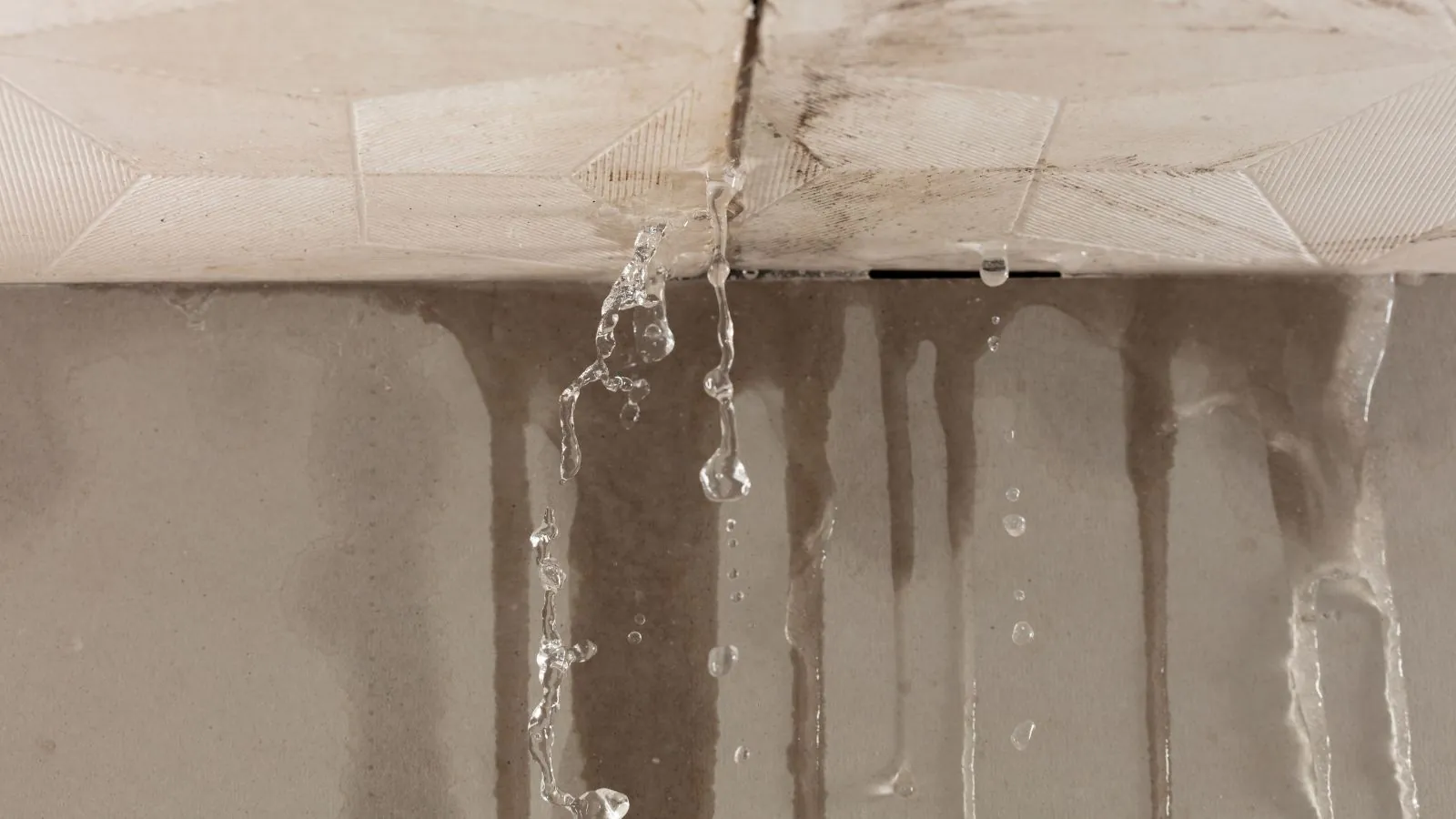
Emergency ceiling water damage repair in Norristown, PA begins with the water above the ceiling, because a sagging board can hold gallons and fall without warning. The phone line is open 24/7, and a dripping ceiling at night gets the same response as one found in the morning.
Keep people and pets out from under a bulging or sagging ceiling and move furniture away. If a light fixture is wet or the water is near wiring, stay out and call the utility or 911. Do not poke a hole to release water unless a crew tells you how to do it safely.
When a wet ceiling is an emergency
Drywall ceilings absorb water, get heavy and lose strength. Water that has pooled can bring the ceiling down, and insulation above it keeps holding moisture long after the leak stops. Stains with brown edges often mean the water has been there more than once.
The source decides the next step. An upstairs bathroom or a failed supply line is a plumbing problem, while rain through a roof is an envelope problem. Either way, the water inside the ceiling cavity has to be found and dried, which is where structural drying comes in.
Where the water comes from
Upstairs bathroom or kitchen
A leaking tub, toilet seal or supply line drops water into the ceiling below. In multi-unit buildings, including the apartment and condominium buildings that have been added in the East End, an upstairs neighbor's leak may be the cause and the property manager should be told.
Roof leaks
Rain finds its way past shingles, flashing or a vent, then wets decking, insulation and drywall. We handle the water damage inside the building. Roof repair is a roofing trade, and the roofer should be called so the leak does not return. See storm water damage for building-envelope losses after wind and rain.
Attic equipment
A condensate line or a drain pan from attic HVAC equipment can overflow onto the ceiling below. The cleanup is the same, and AC leak water damage explains how those losses start.
Plumbing in the ceiling
Supply and drain lines above a finished ceiling can leak for weeks before a stain shows.
Roof leak water damage
When water enters through the roof, the damage rarely stays where it enters. It runs along rafters and decking before it drips onto insulation, so a stain in a bedroom may be several feet from the opening in the shingles.
Crews trace the stain with moisture meters and thermal imaging, remove saturated insulation, open the ceiling where needed and dry the cavity. Temporary tarping and permanent roof repair belong to a roofer. Once the roof is sealed, drying and drywall repair can be finished.
Signs of a ceiling that needs attention
- A yellow or brown stain that grows after rain or after the upstairs shower runs
- Paint peeling or bubbling in a patch on the ceiling
- A sag or a bulge, even a small one, in the drywall
- Drips from a light fixture or a vent
- A musty smell in the room below a bathroom or the attic
- Cracks or soft spots where the ceiling meets the wall
How repair is done
- Locate and stop the sourceThe leak has to stop before drying means anything. Plumbers and roofers handle the repair.
- Remove what is saturatedBulging drywall, wet insulation and loose paint are removed to expose the cavity.
- Dry the cavityAir movers push air through the opening while dehumidifiers pull moisture out of the room.
- Verify with readingsMoisture meters confirm framing and drywall edges are dry before anything is closed up.
- RebuildNew drywall, texture, primer and paint are scoped as a separate line from drying.
Stain, sag or collapse
| What you see | What it usually means | What to do |
|---|---|---|
| Stain only | Water passed through at some point | Find the source, check for moisture above, dry before painting |
| Stain that keeps growing | Active leak | Call now and shut off any water source |
| Sagging or bulging | Water pooled above the board | Keep clear, call for controlled removal |
| Collapse | Board saturated and failed | Stay out, call for safe cleanup and assessment |
What shapes the cost of this job
Repairing a ceiling is part drying and part rebuild. These are the factors that change both.
Insurance: sudden leaks from plumbing are often covered, while gradual roof leaks and wear are often excluded. Ask your insurer and keep dated photos of the stain.
Where we work
We take ceiling leak calls throughout Norristown and in Plymouth Meeting, Bridgeport, Worcester and Conshohocken. The Plymouth Meeting page covers the Germantown Pike corridor and the creek that runs beside Chemical Road.
Standards behind this work
Professional water damage work follows the published ANSI/IICRC S500 standard, which sets how water is classified, what can be dried and what must be removed. That is a statement about the industry standard crews work to. It is not a claim about any individual certificate, and it does not promise a result.
Safety steps while you wait
- Stay out of rooms where water is near outlets, the panel or appliances
- Call the utility or 911 for any electrical or gas hazard
- Keep children and pets away from standing water
- Do not use household vacuums or fans on contaminated water
- Photograph the damage only if it is safe to do so
Frequently asked questions
Do you handle ceiling leak emergencies at night or on weekends in Norristown?
Yes. The line is answered 24/7. If the ceiling is sagging, keep clear and call, and we will talk you through how to keep people safe until crews arrive.
Can I just paint over a ceiling stain?
Not until the cavity above is dry and the source is fixed. Paint over a wet ceiling traps moisture and the stain returns.
Should I cut a hole in a bulging ceiling?
Only under guidance. A controlled hole lets trapped water out, but it can bring the ceiling down on you. Call for instructions or let a crew do it.
Is a roof leak part of this service?
We handle the water damage inside the building. Roof repair is done by a roofer, and drying is scheduled around that repair.
How do I know the ceiling is dry?
Moisture meters and thermal imaging show whether drywall, insulation and framing have returned to normal readings.