
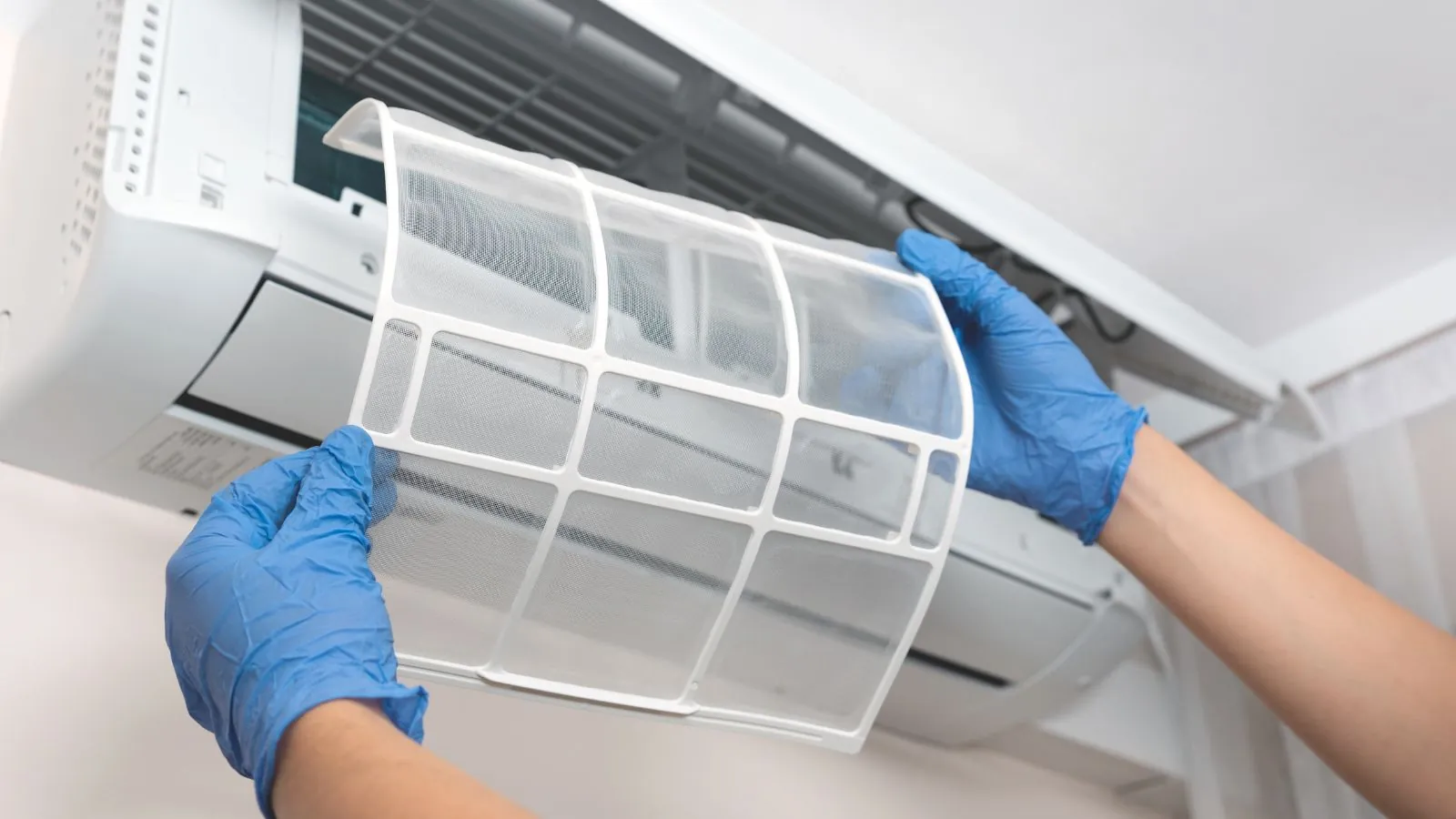
AC leak water damage in Norristown, PA usually starts with a condensate drain line that clogs and overflows, or a drain pan that fills. Our phone line is open 24/7 for any leak that is spreading, though most AC leaks start slowly and turn up as a stain or a damp closet.
Turn off the air conditioner at the thermostat so it stops making condensate. If the water is near light fixtures or the panel, stay out and call the utility or 911. Place a bucket under a drip, move belongings, and note which rooms are wet.
How an AC unit ends up leaking
Clogged condensate line
Algae and debris block the drain, and the pan overflows. This is a common cause in attic and closet air handlers.
Cracked or rusted drain pan
The pan holds condensate until it drains away. A crack lets water fall onto the ceiling or into the closet.
Frozen coil
A restricted coil can ice up and then drip heavily when it thaws.
Loose or failed fittings
Drain line joints can loosen and leak along the line.
What the water reaches
Water from an air handler in an attic soaks insulation first, then drywall, then drips into the room. A closet unit wets the floor and the closet walls. Wall-mounted units leak onto the wall below.
The damage can be extensive before the stain is noticed. We use thermal imaging and moisture meters to follow it, and dry the cavity. If the ceiling has already sagged, see ceiling water damage repair.
Signs of an AC leak
- A stain appearing below an attic or above a closet that holds the air handler
- Water or rust in the drain pan
- Musty smell when the AC is running
- Warped baseboards or a damp carpet near the unit
- A drain line that overflows after a heavy cooling day
What drying involves
- Stop the leakShut off the AC and have an HVAC technician clear or repair the drain line.
- Remove wet insulation and loose drywallSaturated materials are removed to expose the cavity.
- Dry with air movers and dehumidifiersAir movement and moisture removal bring materials down to normal.
- Check for moldCondensate leaks often involve lingering moisture, so testing is considered.
- RepairDrywall and finishes are replaced after readings show they are dry.
Related damage that follows
Because AC leaks run for a long time, mold is a common follow-up. See mold remediation for what testing and containment look like. Floors under a closet unit may also need carpet water damage restoration or hardwood evaluation.
What shapes the cost of this job
AC leak costs vary mostly with how long the water ran and what it soaked.
Insurance: sudden overflow may be covered, while long-term condensate leaks are often considered maintenance. Check your policy and document the stain.
Where we respond
We respond to AC leak calls across Norristown, Bridgeport, Plymouth Meeting, Worcester and Conshohocken. HVAC repair belongs to a licensed HVAC contractor, and we will tell you if the unit needs service before drying starts.
Standards behind this work
Professional water damage work follows the published ANSI/IICRC S500 standard, which sets how water is classified, what can be dried and what must be removed. That is a statement about the industry standard crews work to. It is not a claim about any individual certificate, and it does not promise a result.
Safety steps while you wait
- Stay out of rooms where water is near outlets, the panel or appliances
- Call the utility or 911 for any electrical or gas hazard
- Keep children and pets away from standing water
- Do not use household vacuums or fans on contaminated water
- Photograph the damage only if it is safe to do so
Frequently asked questions
Do you fix the air conditioner?
No. We dry and repair the water damage. An HVAC technician fixes the unit or the drain line.
Can a clogged drain line cause a ceiling to fall?
Yes, if enough water collects in the insulation and drywall. Keep clear of a bulging ceiling and call.
How do I stop it from happening again?
Have the drain line and pan checked as part of regular HVAC service. A technician can add a safety switch that shuts the unit off if the pan fills.
Will I get mold?
Condensate leaks that continue for weeks can lead to mold. Fast drying lowers the risk, and testing is available if you see or smell it.
Is this an emergency?
It can be if water is actively spreading. Slow leaks are less urgent but should still be dried quickly.