
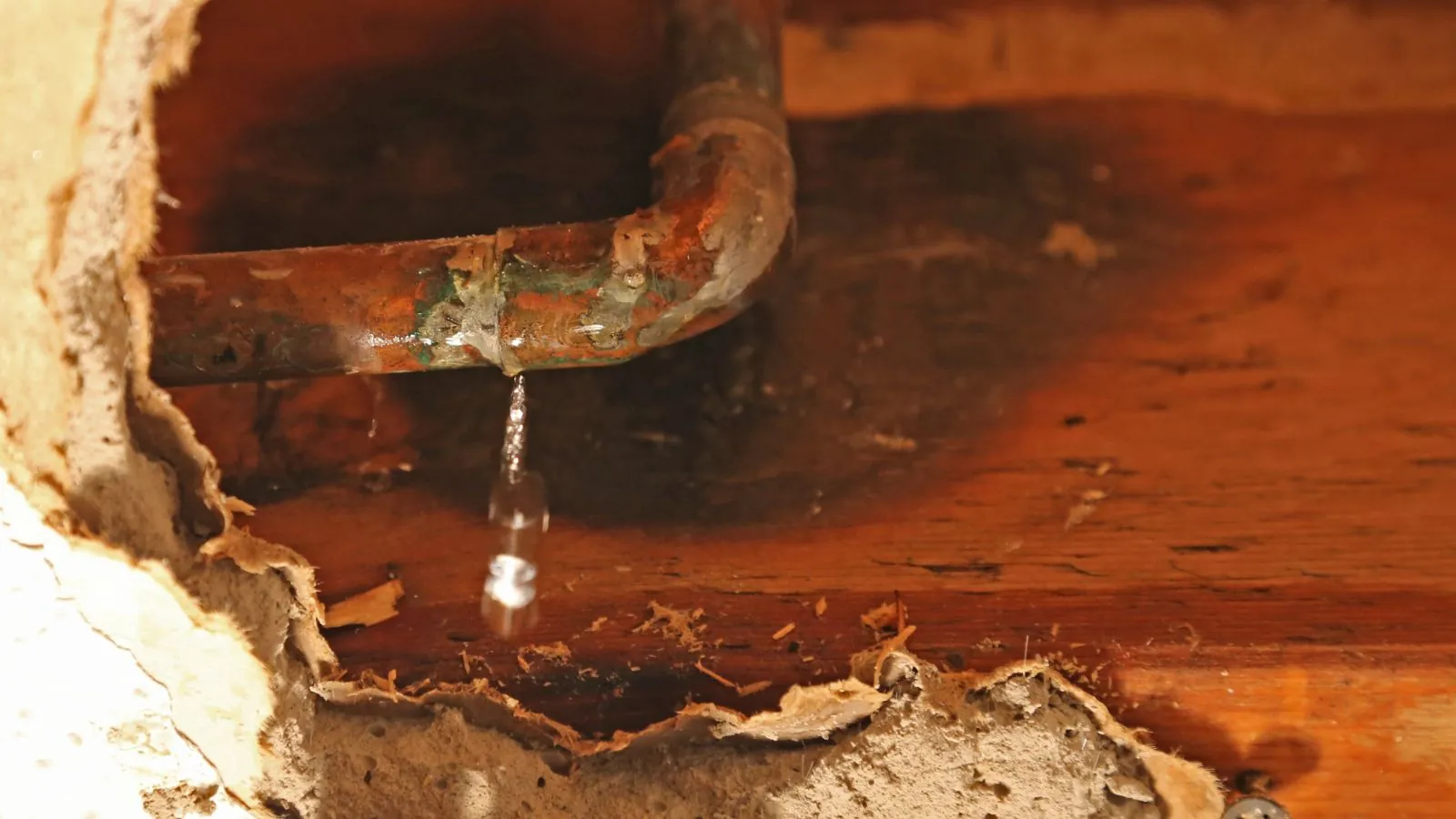
A burst pipe is an emergency in Norristown, PA because a pressurized supply line keeps pushing water until someone closes a valve. Our phone line answers 24/7, so a pipe that gives way at 3 a.m. gets the same attention as one at noon.
Go to the main shut-off first and turn it clockwise until it stops. Open a faucet on the bottom floor to drain what is left. If water is falling near light fixtures, outlets or the panel, stay out of the room and call the utility or 911 before you call us.
When a burst pipe is an emergency
A supply pipe at normal household pressure can release many gallons in an hour, and the water follows gravity through floor penetrations, light fixtures and wall cavities. Water that started under a kitchen sink can show up as a ceiling stain in the room below within an hour or two.
Cleanup starts the moment the water is off. Crews extract standing water, open the wall or ceiling where water is trapped and begin structural drying. Waiting for the plumber to finish before drying starts adds time that the wet materials do not have.
What usually fails and what it leaves behind
Rigid supply lines
Copper and plastic lines can split at a joint, a corroded section or a freeze crack. The failure is often inside a wall, so the first sign is a damp spot, a stain or the sound of running water.
Flexible connectors
The braided hoses under sinks and behind toilets, washers and dishwashers can burst at the crimped ends. Water from these is usually clean at first and spreads across kitchen or bathroom floors. See appliance leak cleanup when the failed part belongs to a machine.
Joints in finished walls
A pinhole at a fitting may drip for weeks before anyone notices. By then the drywall behind it can be soft, and the cleanup is more like wall and drywall water damage repair than a fresh burst.
What to do before crews arrive
- Close the main valveKnow where it is before you need it. If you cannot turn it, call your water utility.
- Cut power only if it is safeNever reach for a breaker while standing in water. If the panel is wet or the floor around it is, leave it alone and call the utility or 911.
- Photograph the damageTake photos and short video of the pipe, the water and the affected rooms before you move anything. The Pennsylvania Insurance Department advises doing this before cleanup.
- Lift and move what you canPull rugs, books, electronics and small furniture away from the wet area. Leave heavy items in place.
- Call and describe the sourceTell the dispatcher which pipe it was, which floors are wet and whether the ceiling below is dripping.
Cleanup after the pipe is repaired
A plumber repairs the pipe. Restoration deals with the water the pipe released, and the two jobs can run side by side once the line is off. Crews extract water, pull baseboards, cut drywall flood lines when needed, set air movers and LGR dehumidifiers, and return for readings until walls and floors are dry.
If water came through a ceiling, the finished ceiling and insulation above it are checked too, and ceiling water damage repair follows when the board has sagged or stained. Rebuilding is scoped separately so you can see drying and repair as two lines.
Hot water lines
Water from a hot line can scald. Keep clear of spray and steam, and let a plumber or crew shut off the heater supply before anyone works under a leak.
What shapes the cost of this job
A burst pipe can cost very little or a great deal. These are the questions that decide where yours lands.
Insurance: a sudden and accidental pipe burst is often a covered event, but the repair of the pipe itself and long-term seepage often are not. Read your policy or call your insurer, and keep receipts.
Service across Norristown and nearby towns
We take burst pipe calls from Norristown and from Bridgeport, Plymouth Meeting, Worcester and Conshohocken. The Bridgeport page explains how the Schuylkill crossing at DeKalb Street affects routes between the two.
Standards behind this work
Professional water damage work follows the published ANSI/IICRC S500 standard, which sets how water is classified, what can be dried and what must be removed. That is a statement about the industry standard crews work to. It is not a claim about any individual certificate, and it does not promise a result.
Safety steps while you wait
- Stay out of rooms where water is near outlets, the panel or appliances
- Call the utility or 911 for any electrical or gas hazard
- Keep children and pets away from standing water
- Do not use household vacuums or fans on contaminated water
- Photograph the damage only if it is safe to do so
Frequently asked questions
Do you handle burst pipe emergencies at night or on weekends in Norristown?
Yes. Burst pipes do not wait for business hours and the line is answered 24/7. Close the main shut-off, move to a dry area, and call. We do not promise an arrival time, but we do give safety steps on the call.
Do I call a plumber or a restoration company first?
If the water is still running, shutting the main off comes first. Then call both. The plumber repairs the pipe, and restoration removes the water and dries the structure. Calling restoration early shortens the time the materials stay wet.
How far can water travel from one burst pipe?
Farther than most people expect. It runs along floor joists, into wall cavities and through ceiling penetrations. That is why crews use moisture meters and thermal imaging instead of judging by the stain.
Is the water from a supply line safe to touch?
Fresh water from a clean supply line is Category 1, but it picks up contamination from building materials quickly. Keep children and pets out, and avoid contact if the water touched anything unclean.
What should I photograph for insurance?
The failed pipe if it is visible, standing water, wet ceilings and walls, and damaged belongings, taken before cleanup. Keep receipts for any emergency repairs you pay for.