
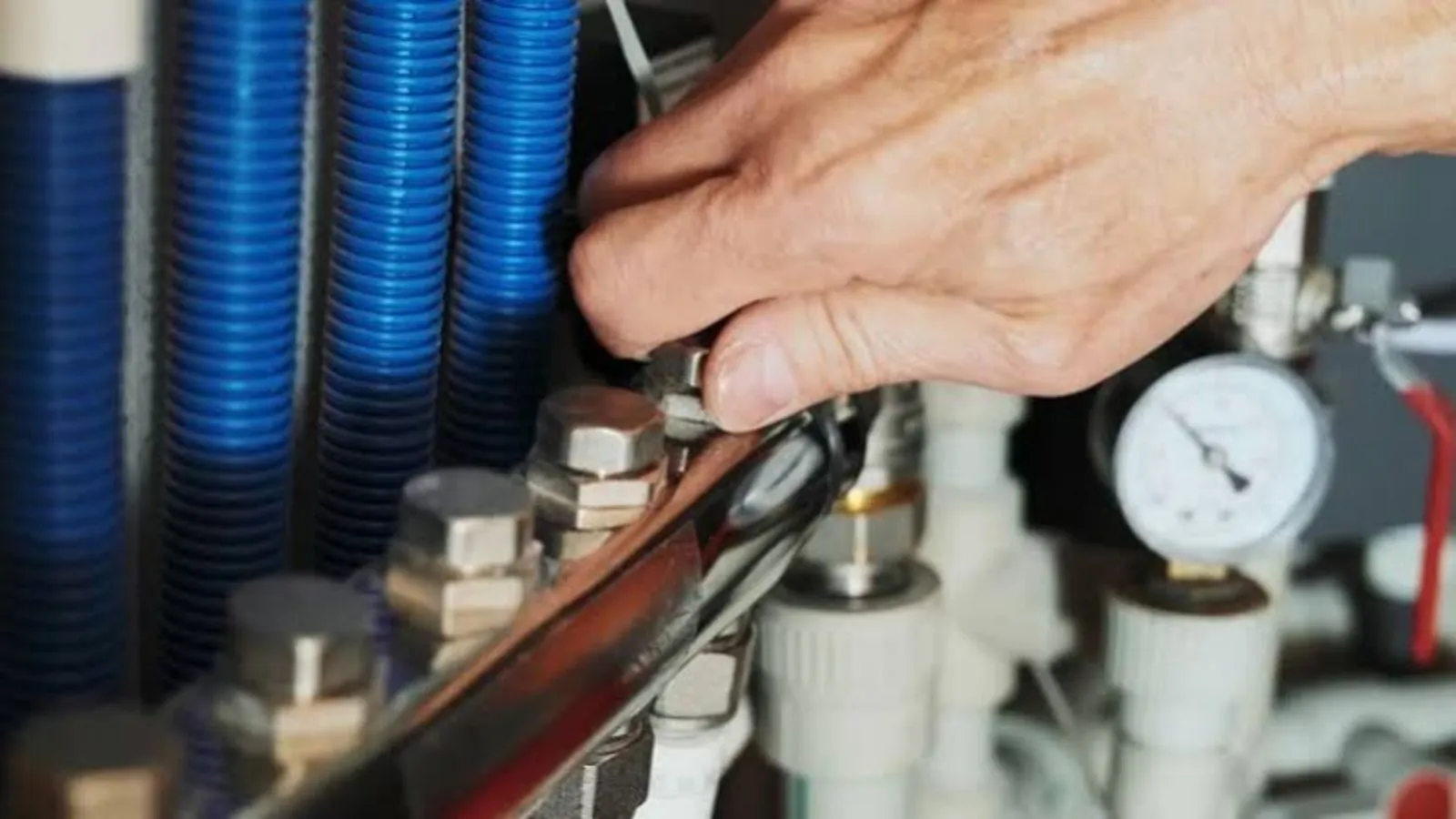
Why you should know this before an emergency
When a pipe bursts, minutes matter. Water at supply pressure can release a great deal of water in a short time. Knowing where the main shutoff is, and that it turns, lets you stop the flow before the crew arrives. Every adult in the house should know where it is.
This guide describes common setups. Your house may differ, so check yours in daylight, when nothing is wrong.
Where to look
| Location | What to look for |
|---|---|
| Basement or crawl space | Where the water line enters, often near the front wall, with a valve and a meter |
| Utility or mechanical room | Near the water heater or furnace |
| Garage | On the wall closest to the street |
| Kitchen or under a stair | Sometimes in a cabinet where the line enters |
| Outside | A meter box in the ground or at the curb, with a shutoff for the property |
Follow the main supply pipe back from the water heater or meter. The valve is on the house side of the meter.
How to close it
- Identify the typeA round wheel handle is a gate valve and a lever handle is a ball valve.
- Close itTurn a wheel clockwise until it stops, and turn a lever a quarter turn so it is crosswise to the pipe.
- Open a faucetOpen a low faucet and a high one to drain the pipes and relieve pressure.
- Check the meterIf the meter dial is still moving, the leak is before the valve or the valve is not sealing.
- Turn off the water heaterIf the water supply is off for some time, switch off the heater to protect the element or burner.
If the valve is stuck or the leak is outside
Do not force a valve that will not turn, because it can snap. If the leak is on the street side of the meter, or you cannot find or close the valve, call your water utility. The bill or the meter shows who supplies your water. For an emergency inside the house, a plumber can replace a failed valve, and replacing it is a good idea after the cleanup.
Also know the shutoffs for individual fixtures, which are small valves under sinks and behind toilets. Closing one of these stops that fixture without cutting off the whole house.
After you shut it off
Turn off power to wet areas only if you can reach the panel without standing in water. If water is near outlets or the panel, stay out and call the utility or 911. Move belongings, wipe up standing water and take photos. Then call for extraction and drying. The next steps are described under water extraction and burst pipe water damage.
Fixtures that have their own shutoffs
You do not always need the main. Toilets have a small valve on the wall or floor behind the bowl. Sinks have two valves under the basin, one for hot and one for cold. Washing machines have a pair of valves behind the machine, and many dishwashers have a valve under the sink. Dishwasher and ice-maker lines can also have their own small valve.
Turn each fixture valve clockwise until it stops. Do it once a year so it does not seize, and replace any that drip. If a valve will not close, shut the main and call a plumber.
Frozen or burst pipes in winter
In cold weather, the main shutoff is the first thing to use if a pipe splits. A frozen pipe may not leak until it thaws, so if you find one that is frozen but not leaking, shut the water off before you thaw it. Open the faucet so melting water has somewhere to go. Never use an open flame to thaw a pipe.
Once the water is off, take photos, move belongings and call for extraction. The steps for a burst pipe are on the burst pipe page.
Norristown: your water supplier
Water supply and sewer service are different utilities in Norristown. The sewer system is operated by the Norristown Municipal Waste Authority, formed in 1993, with its treatment plant at 368 East Washington Street. The water supplier is named on your water bill, and that is who to call about the meter or the curb shutoff. We do not state which company serves which street. Test the main valve once a year so it does not seize.
The Montgomery County 911 system handles emergencies if a leak creates a hazard, such as water near electrical equipment.
Mark it and test it
- Tag the valve so a visitor can find it
- Turn it off and on once a year to prevent seizing
- Keep a wrench or key handy if a special tool is needed
- Show everyone in the house where it is
- Photograph it for your records
Residents of nearby towns should do the same. See the Plymouth Meeting and Worcester pages.
Standards and sources
Crews work to the published ANSI/IICRC S500 standard for water damage. For flood risk at a specific address, the FEMA Flood Map Service Center is the primary source, and your insurer can explain coverage.
Safety steps while you wait
- Stay out of rooms where water is near outlets, the panel or appliances
- Call the utility or 911 for any electrical or gas hazard
- Keep children and pets away from standing water
- Do not use household vacuums or fans on contaminated water
- Photograph the damage only if it is safe to do so
Frequently asked questions
Which way do I turn the water main off?
A wheel handle closes clockwise. A lever handle closes by turning a quarter turn so it sits crosswise to the pipe.
What if my main valve is stuck?
Do not force it. Call your water utility or a plumber.
Who do I call if the leak is outside before the meter?
Your water utility, named on the water bill.
Do I need to turn off the water heater?
If the water is off for a while, yes, since the tank should not run dry.
Who operates Norristown's sewer system?
The Norristown Municipal Waste Authority, formed in 1993.