
Why no single number works
A burst supply line caught in an hour is a different job from a slow leak found after weeks. We do not publish dollar ranges, since a figure without a sourced local basis is a guess. This guide explains what drives the price so you can judge a quote, and ask better questions.
Be cautious about a price given before anyone has seen the loss. A scope should name rooms, materials, equipment and visits.
The five main factors
| Factor | What it changes |
|---|---|
| Water category 1, 2 or 3 | Contaminated water means removal, protective gear and disinfection |
| Affected area | More square footage means more extraction, equipment and labor |
| Materials involved | Hardwood, plaster and concrete dry slowly, and padding and insulation are often replaced |
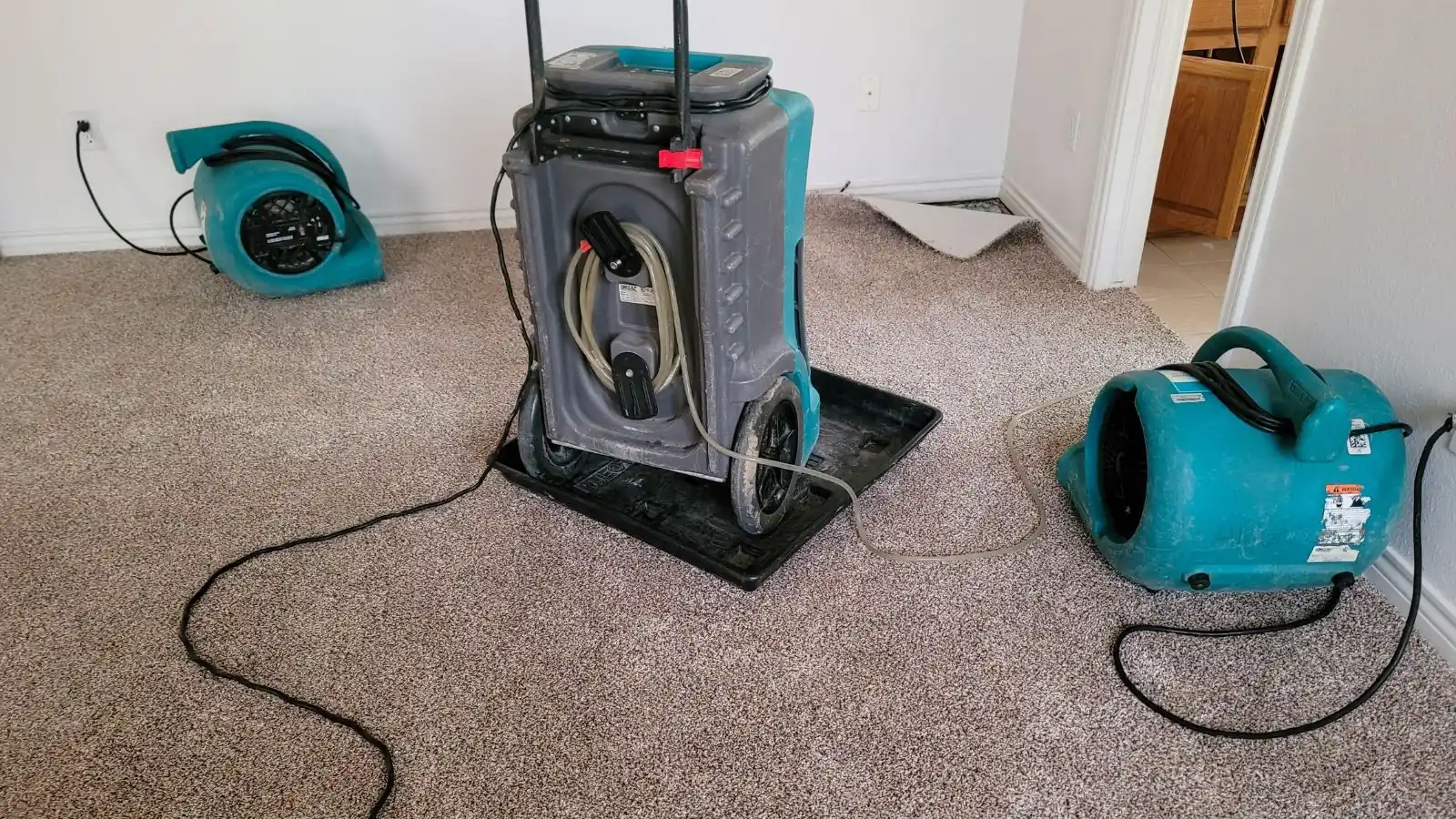
| Drying days and equipment | Each air mover and dehumidifier adds to the daily total |
| Rebuild scope | Replacing drywall, flooring and cabinets is separate from mitigation |
Mitigation versus rebuild
Mitigation is stopping the damage: extraction, drying, removing wet materials and documentation. Rebuild is putting the house back, with new drywall, paint, flooring or cabinets. They are often priced and done separately, and sometimes by different companies. A quote that mixes them should say which line is which.
Drying is explained at structural drying and dehumidification, and the first response at water extraction.
What belongs in a written scope
- Rooms and areas included
- Water category and how it was determined
- List of materials to be removed
- Equipment types and expected days
- Number of monitoring visits
- What is excluded, such as rebuild or contents
How speed changes the cost
Early action usually lowers the total. Water that is extracted and dried within a day or two often leaves drywall and flooring in place. Water that sits spreads upward through walls and downward into subfloors, and mold can start within 24 to 48 hours, according to the EPA. A larger area and more removal raise every line on the quote.
That is why the first call matters more than shopping around for a quote while water spreads.
Insurance and who pays
If your policy covers the loss, the insurer pays according to its terms, minus the deductible. Coverage varies by cause. A sudden pipe burst is often covered, and flood and sewer backup often need separate coverage. Ask your insurer before work starts what documentation they want, and get a written scope.
Do not pay the full amount up front for work that has not been done. Ask how payment is handled when the insurer pays.
An example of how two losses differ
Imagine two Norristown homes. In the first, a dishwasher line splits under the sink at night, and the owner calls within the hour. Water is extracted from the kitchen floor, the cabinet base is dried and readings show the walls and subfloor return to normal in a few days. The scope is mostly extraction, equipment days and monitoring.
In the second, a slow supply leak behind a bathroom wall runs for weeks before a stain appears. The drywall is soft, insulation is wet, the subfloor is stained and mold has started. The scope now includes removal, containment, replacement and a longer drying period. The cause is the same kind of failure. The cost differs because of time, area and materials.
That is why a number given without seeing the loss is not trustworthy. It is also why quick action is the best way to hold a scope small.
Questions to ask before work starts
- What water category do you believe this is, and why?
- Which materials will be removed and which will be dried?
- How many pieces of drying equipment and for how many days?
- How many monitoring visits are included?
- What is excluded from this scope?
- How will you document the work for my insurer?
Clear answers to these questions tell you more than any price on its own.
Norristown: what to expect locally
Norristown is a borough with older housing, newer townhouses, apartment buildings and commercial buildings in the downtown. The mix means losses range from a kitchen leak to a multi-floor commercial event. We do not claim a typical local price. The borough's municipal offices handle permits for rebuild work, and your insurer handles coverage.
For commercial buildings, see commercial water damage restoration. Homeowners in Bridgeport and Conshohocken face the same cost factors.
Getting your real number
The only reliable number comes from someone seeing the loss. Call the 24/7 line, describe what happened and what is wet, and expect questions about the source, the water type and the materials. The crew then explains the scope and the equipment before work begins, and you decide.
Safety steps while you wait
- Stay out of rooms where water is near outlets, the panel or appliances
- Call the utility or 911 for any electrical or gas hazard
- Keep children and pets away from standing water
- Do not use household vacuums or fans on contaminated water
- Photograph the damage only if it is safe to do so
Frequently asked questions
Can you give an exact price over the phone?
No. A scope needs the water category, the area and the materials.
Is mitigation the same as rebuild?
No. Mitigation stops the damage and dries the structure. Rebuild replaces finishes.
Does speed change the cost?
Yes. Early extraction and drying usually keep the scope smaller.
What should a written scope include?
Rooms, water category, materials to remove, equipment and days, monitoring visits and exclusions.
Does insurance pay for restoration?
If the cause is covered, usually after the deductible. Ask your insurer.